
What the air in your meeting rooms is costing you
Harvard put office workers in two rooms that looked identical. The only difference was the air. The results are hard to ignore.
22 July 2026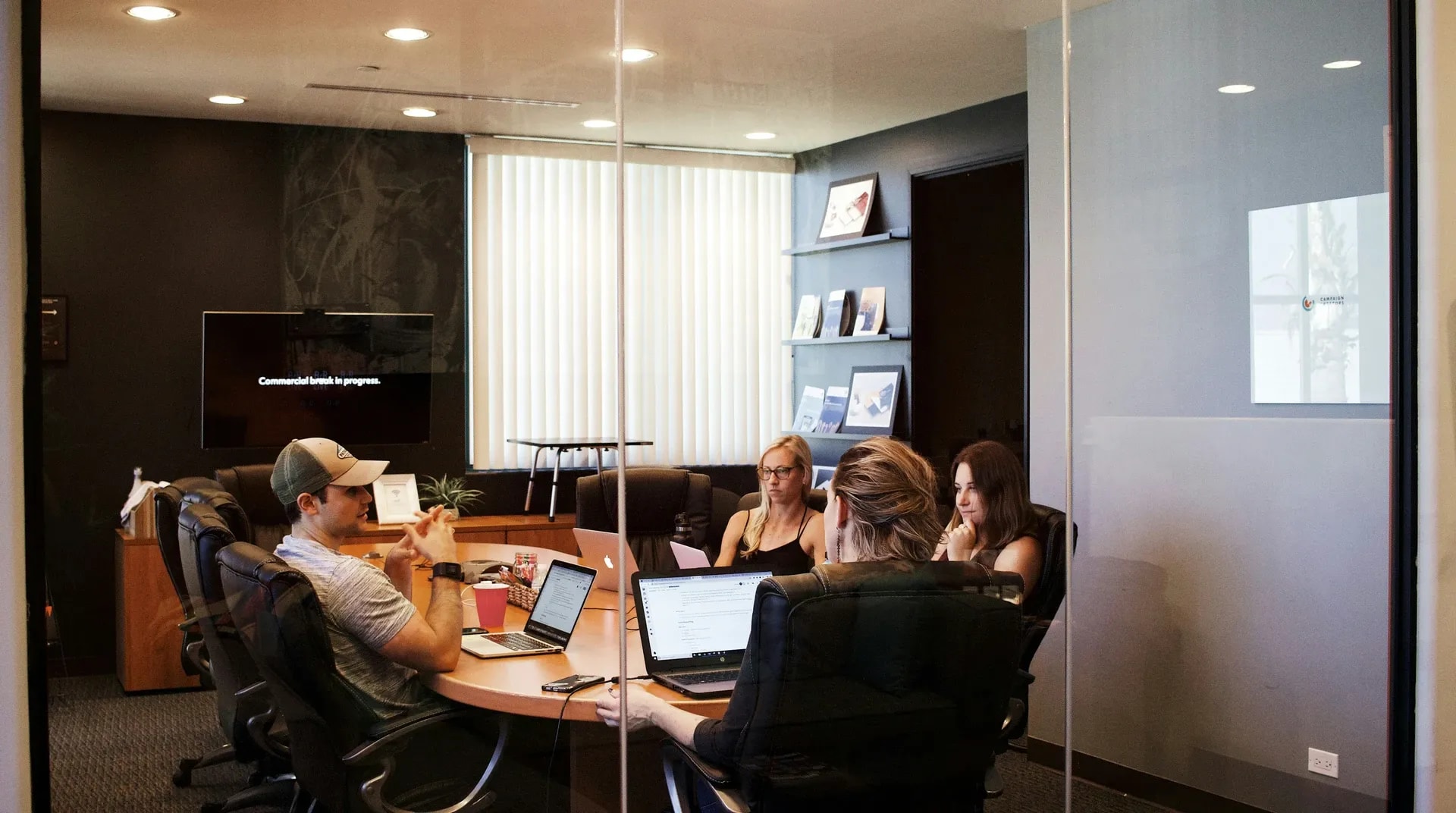
What the research found
The COGfx Study, led by researchers at the Harvard T.H. Chan School of Public Health, ran a double-blind controlled exposure experiment. Participants worked in office conditions at 950 parts per million of CO2, which is ordinary for a conventional building, and in conditions at 600 ppm.
Cognitive function scores were 101 percent higher in the better ventilated condition. Broken down, crisis response scores were 131 percent higher, information usage 299 percent higher and strategy 288 percent higher in the best performing condition.
Later work by the same group, a multi-country longitudinal study of office workers in real buildings rather than a laboratory, found the same association between CO2 exposure and cognitive performance.
What we see happening
Indoor air is the last major workplace variable that almost nobody instruments.
Consider what a typical organisation already tracks about its building: energy, cost per square metre, attendance, bookings, cleaning frequency, incident reports. Now consider what it tracks about the conditions inside the rooms where its most consequential decisions get made. In most cases, nothing at all, unless somebody complains.
That asymmetry is strange, and we think it will not last. Three forces are closing it at once. Regulation is moving, with indoor environmental quality monitoring entering European building rules. Employers are being asked to evidence wellbeing rather than assert it. And the sensors themselves have become cheap enough that measurement is no longer the expensive part.
There is also a management insight buried in the study that gets overlooked. The largest effects were in strategy and crisis response, which are exactly the cognitive functions organisations convene meetings for. Nobody books a room to do data entry. They book a room to decide something. So the rooms where air quality matters most are the rooms most likely to be full, sealed and running at the top of their CO2 range by the second hour.
We expect climate data to follow the same trajectory occupancy data has just taken: from an anecdote, to a report, to a routine input into how buildings are operated.
Worth knowing before you measure: a closed meeting room with six people in it can move from ambient CO2 to well above 1,000 ppm within an hour, and considerably faster if the ventilation is set to a schedule rather than to occupancy. Nobody in the room notices a threshold being crossed. They notice that the conversation has started going in circles, and they blame the agenda.
This is also where wellbeing and energy stop being separate conversations. Ventilating harder costs energy, so the instinct in a cost-conscious organisation is to ventilate less. Measuring per space breaks that trade-off, because it lets you ventilate the occupied room properly and stop conditioning the empty one, which is usually a net saving rather than a net cost.
What this means for how you run a workplace
Start by finding out where you actually are. Most organisations have never measured, and the first two weeks of data typically produce at least one surprise, usually a room that everyone loves and that nobody should be in after 11am.
iotspot Smart Climate measures CO2, temperature, humidity, volatile organic compounds and pressure per space, and reduces it to a single climate score per room so a floor can be read at a glance. Alerts fire when a room drifts outside acceptable range, which turns comfort complaints from an argument into a reading.
The same sensor layer pays for itself twice. Fed back into building systems, it lets heating, cooling and ventilation respond to real conditions instead of a fixed schedule, and it supplies indoor environmental quality data straight into iotspot ESG Reporting.
The honest caveat
The original COGfx experiment had 24 participants. That is a small sample, so the exact multiples should be treated as an indication of direction rather than a promise of doubled performance in your building. What makes it credible is the design: double-blind and controlled, which is rare in workplace research, and subsequently supported by field studies in real offices across multiple countries. The number that will convince your own organisation is your own baseline.
Keep reading
News Flash: Your office is full two days a week and paid for five
Dutch national news has put a number on something every facility manager already feels on a Tuesday morning. Sixty five …
Read moreTen years iotspot. Ten years insights into the Smart Workplace
In 2016 iotspot started in 's-Hertogenbosch with one conviction: people should be able to decide when, where and with wh…
Read moreMeasured attendance is 34 percent. Reported attendance is not.
Advanced Workplace Associates put sensors in 55 offices and counted. The result sits a long way from what employees, and…
Read more