
Notes on hybrid work and workplace data
What the research actually measured, what it means for the office you run, and where the difference between booked and used turns into money.
News Flash: Your office is full two days a week and paid for five
Dutch national news has put a number on something every facility manager already feels on a Tuesday morning. Sixty five percent of office workers come in on Tuesday. Nineteen percent come in on Friday. The gap between those two days is the most expensive line in the workplace.
Read the article →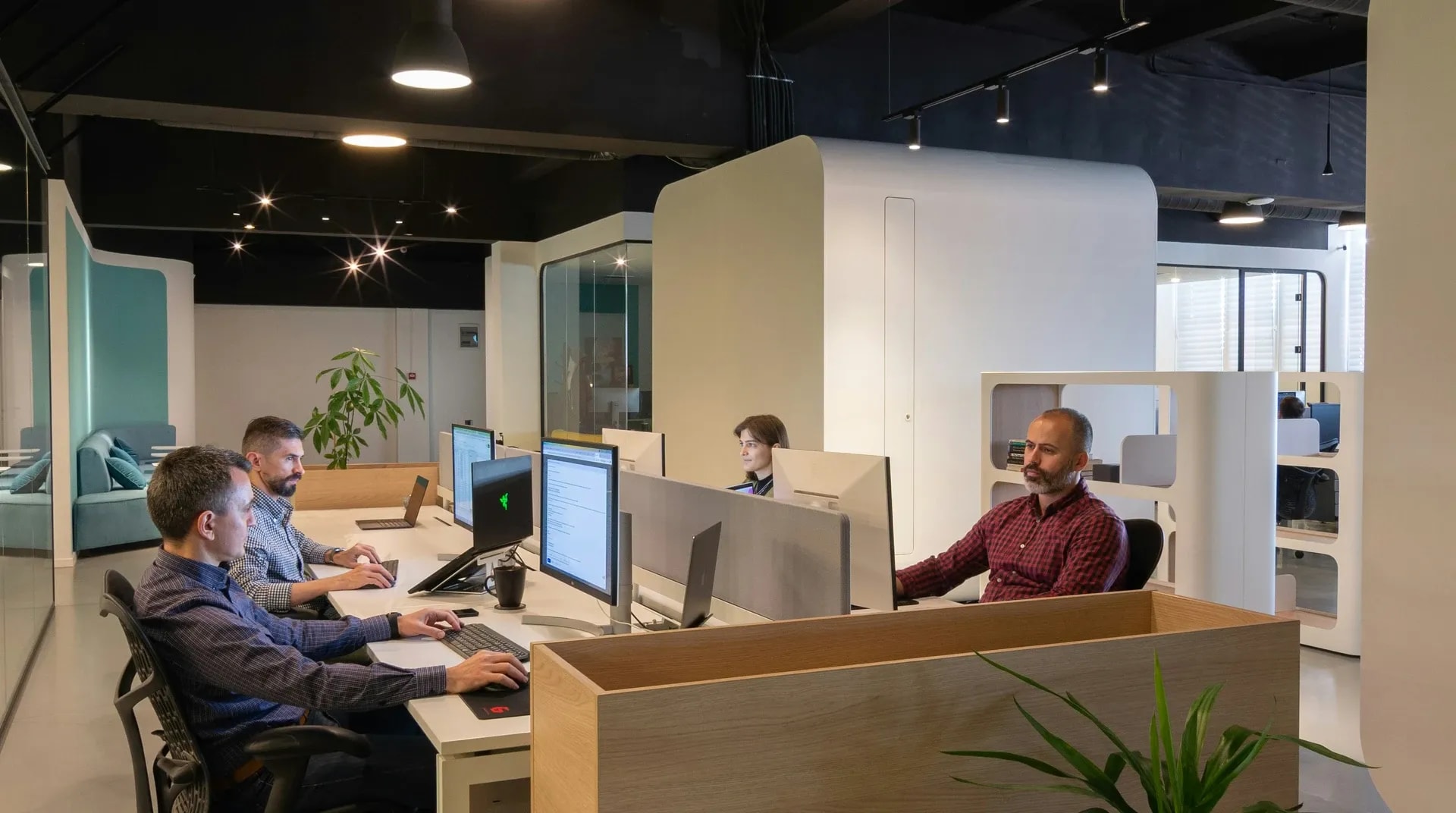
Ten years iotspot. Ten years insights into the Smart Workplace
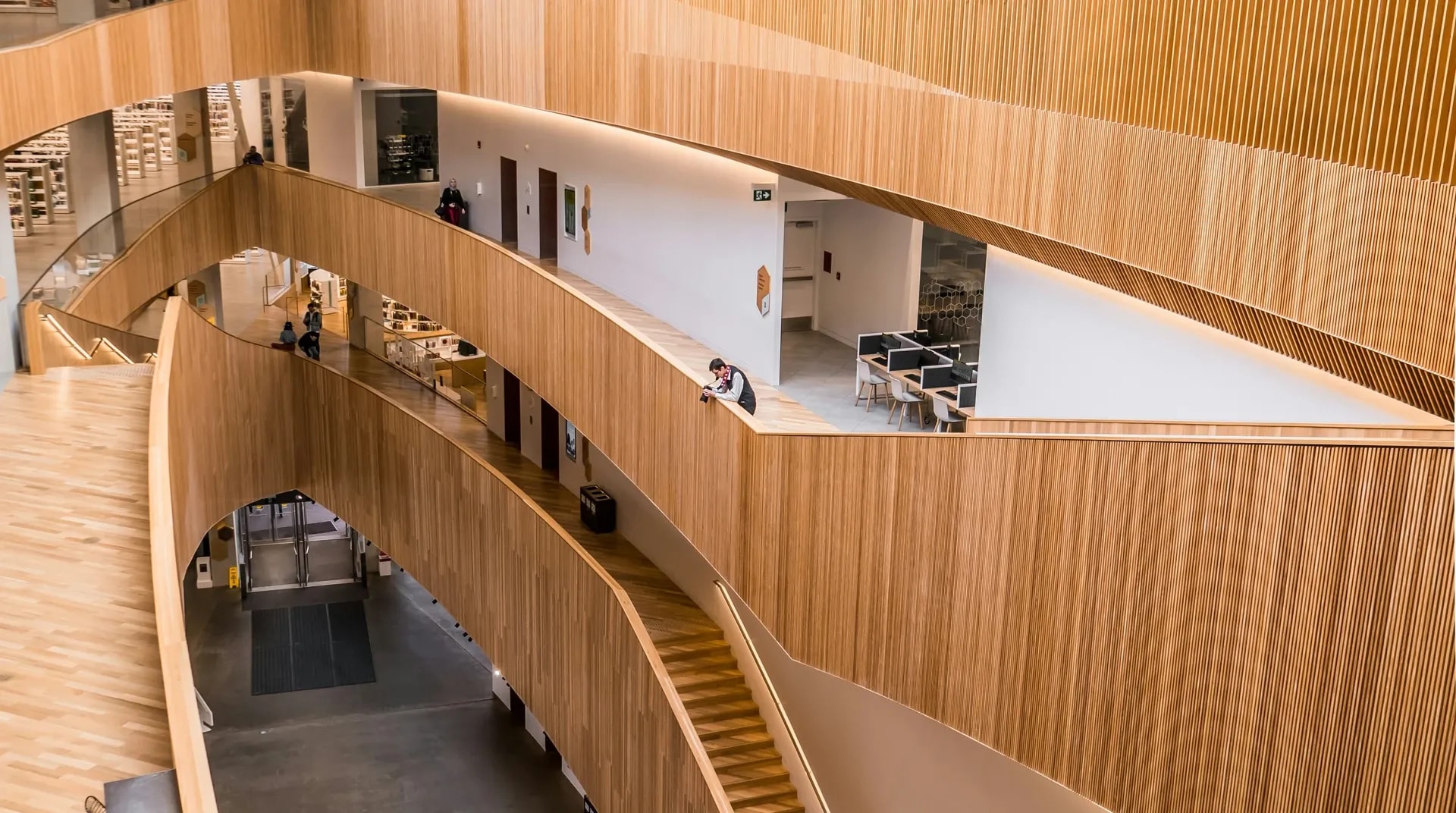
In 2016 iotspot started in 's-Hertogenbosch with one conviction: people should be able to decide when, where and with whom they work. The first product did exactly one thing. It let you book a desk. Ten years later iotspot runs across a global portfolio for Johnson & Johnson, Vodafone, Hugo Boss, Puma and Porsche, for governmental and semi-governmental organisations. In those ten years iotspot grew from a desk booking system into a Smart Workplace intelligence platform: insights into every square metre of the office building, and we support the collaboration that hybrid working depends on.
4 September 2026 →
Measured attendance is 34 percent. Reported attendance is not.
Advanced Workplace Associates put sensors in 55 offices and counted. The result sits a long way from what employees, and leaders, believe.
2 September 2026 →
The occupancy gap is closing, and estimation is what got left behind
Every corporate real estate team has a utilisation number. Far fewer can say where it came from. JLL has now measured what that difference is worth.
2 September 2026 →
Desk booking tells you intent. It does not tell you occupancy.
Most workplace decisions in 2026 are still made on a number that was never designed to carry them. Your desk booking system records what people planned to do. It does not record what happened after they arrived.
26 August 2026 →
Your biggest energy line is running on a timetable
Heating, cooling and ventilation account for the majority of what an office building consumes. In most buildings, they are scheduled rather than demand driven.
21 August 2026 →
Hybrid work became structured. Most policies did not.
The debate about whether hybrid work is permanent is over. The debate about how to run it is not. In 2026 the majority of large organisations have moved from a flexible arrangement to a stated expectation, and the operational load of that shift has landed on HR.
19 August 2026 →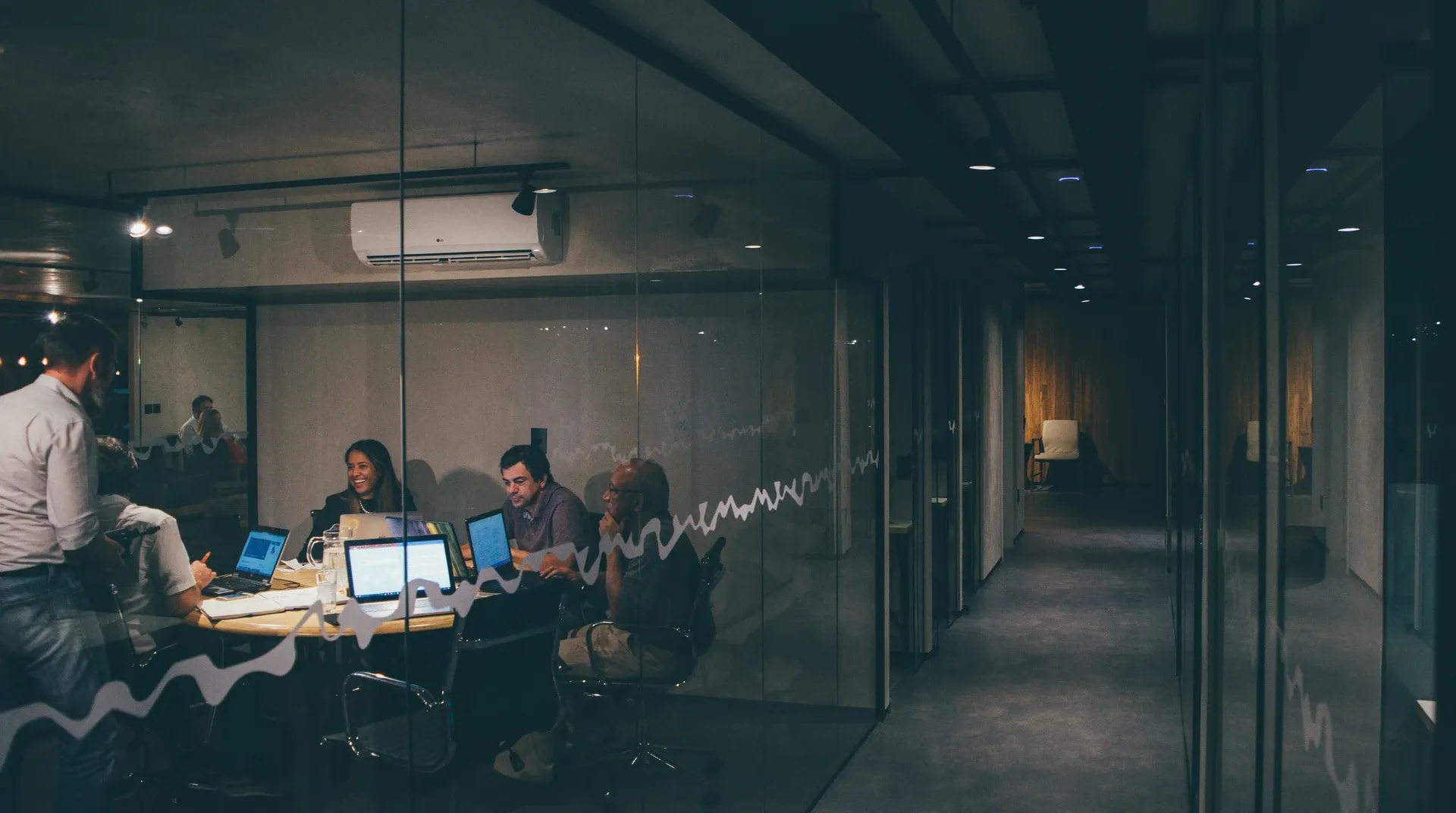
Office analytics: five questions, one privacy test
Office analytics has a credibility problem, and it is not a technical one. JLL's Global Occupancy Planning Benchmark Report 2026, covering 84 organisations and 716 million square feet, found that only 7 percent rate their data capabilities as excellent, while 90 percent already apply utilisation data to space planning decisions. Most organisations are deciding on data they do not fully trust.
12 August 2026 →
Room booking: more rooms is rarely the right answer
Every facility manager knows the request. There are never enough meeting rooms. It arrives with genuine frustration behind it, and acting on it directly is usually the most expensive mistake available.
5 August 2026 →
The office has one job left, and it takes up a quarter of the week
Gensler asked 16,459 office workers in 16 countries how their week actually breaks down. The answer reframes what an office is for.
4 August 2026 →
The office is getting better. Home is still winning.
Leesman has been scoring workplace experience for over a decade. The office score is climbing. It is not climbing fast enough.
1 August 2026 →
The cost of a workplace is rising while its use is not
The cost of a workplace is one of the largest controllable lines in a corporate budget, and one of the least precisely measured. The reason is structural. Cost is indexed to floor area. Use is not.
29 July 2026 →
Engagement has a number attached. So does the room it happens in.
Gallup has pooled 736 studies covering more than three million employees. The findings give workplace teams something they rarely have: a defensible link to the business.
22 July 2026 →
What the air in your meeting rooms is costing you
Harvard put office workers in two rooms that looked identical. The only difference was the air. The results are hard to ignore.
22 July 2026 →
The hybrid workspace has to earn the commute
A hybrid workspace competes with a kitchen table that has no commute attached to it. That is the actual benchmark, and it is why attendance policy alone rarely produces the result HR was promised.
22 July 2026 →
Most collaboration never reaches a calendar
Microsoft studied how the working day is actually spent. The finding that should worry workplace teams is not about meetings. It is about the meetings that were never booked.
16 July 2026 →
Experience iotspot live
Thirty minutes, no preparation needed. We walk you through it.
- No slide deck
- Your own floor plan
- A pilot price on one floor